Email Marketing on a Budget: 7 Tools Under $20
Business email platforms for marketing campaigns, automation, and newsletters. Different use case than personal email.
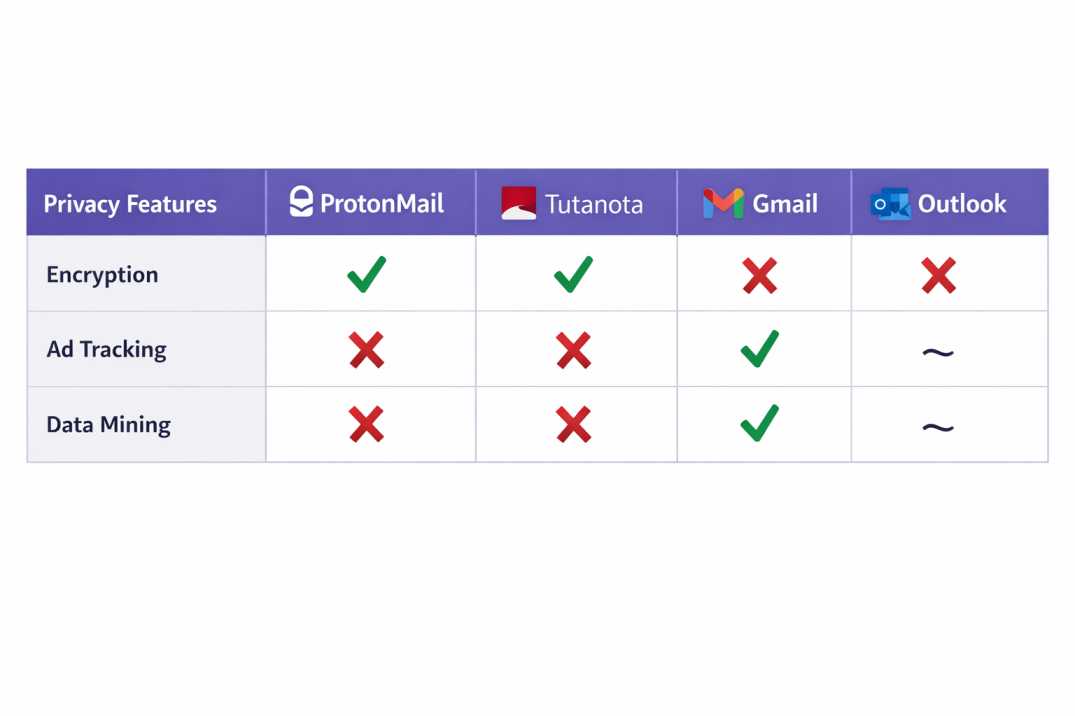
Gmail dominates with1.8 billion usersbut gives Google access to your emails. We tested 6 personal email services forprivacy, storage, and ease of use. Here's which one actually protects your data while being free.
For most people: Proton Mail (free, encrypted, Swiss privacy laws). For Google ecosystem users: Gmail (15GB, best search, convenience). For Microsoft users: Outlook (clean interface, Office integration). All three are completely free for personal use. Choose based on whether you prioritize privacy (Proton) or features (Gmail/Outlook).
Business email platforms optimize for automation, campaigns, and analytics. Personal email providers focus on different priorities:
We tested six personal email services used by real individuals—not marketing platforms. Each ran for 60+ days with actual daily use, spam exposure, and mobile app testing.
Best for Privacy-Conscious Individuals
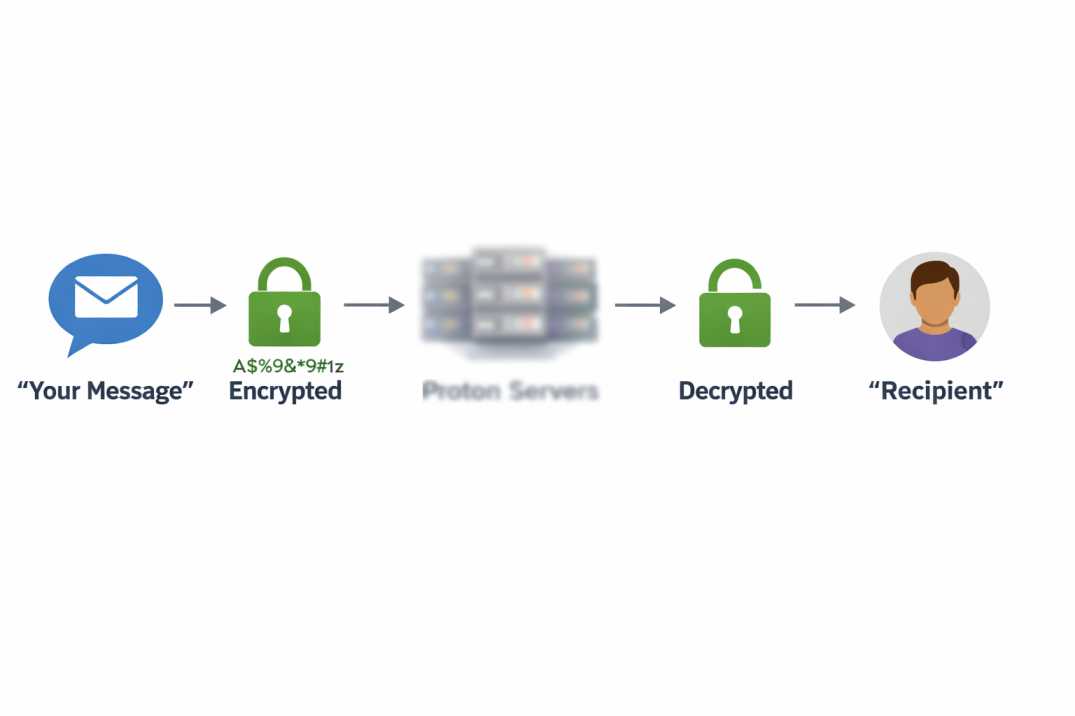
Privacy-focused individuals who prioritize data security over convenience. Ideal if you're concerned about government surveillance, corporate data mining, or simply want emails that only you can read. Not ideal for heavy email users needing 10GB+ storage.
Best for Google Ecosystem Users
People already using Google Drive, Calendar, Meet, or Android phones. Best free email provider if you prioritize convenience, storage, and features over privacy. Not recommended if you're concerned about data collection or want to avoid Big Tech.
Best for Microsoft Office Users
Windows users, Office 365 subscribers, or anyone wanting a clean email experience without Google's ecosystem. Good middle ground between Gmail's features and Proton's privacy. Ideal email app for personal use if you value simplicity.
Best for Apple Device Owners
iPhone, iPad, and Mac users wanting seamless email across Apple devices. Perfect if you value privacy features like tracker blocking and email aliases. Not recommended for Android users or heavy email storage needs.
Best for Unlimited Storage Needs
People needing massive free email storage (1TB) who don't mind ads. Good for archiving decades of emails without storage anxiety. Consider alternatives if privacy or modern interface matters. Yahoo's security history is concerning.
Best Open-Source Private Email
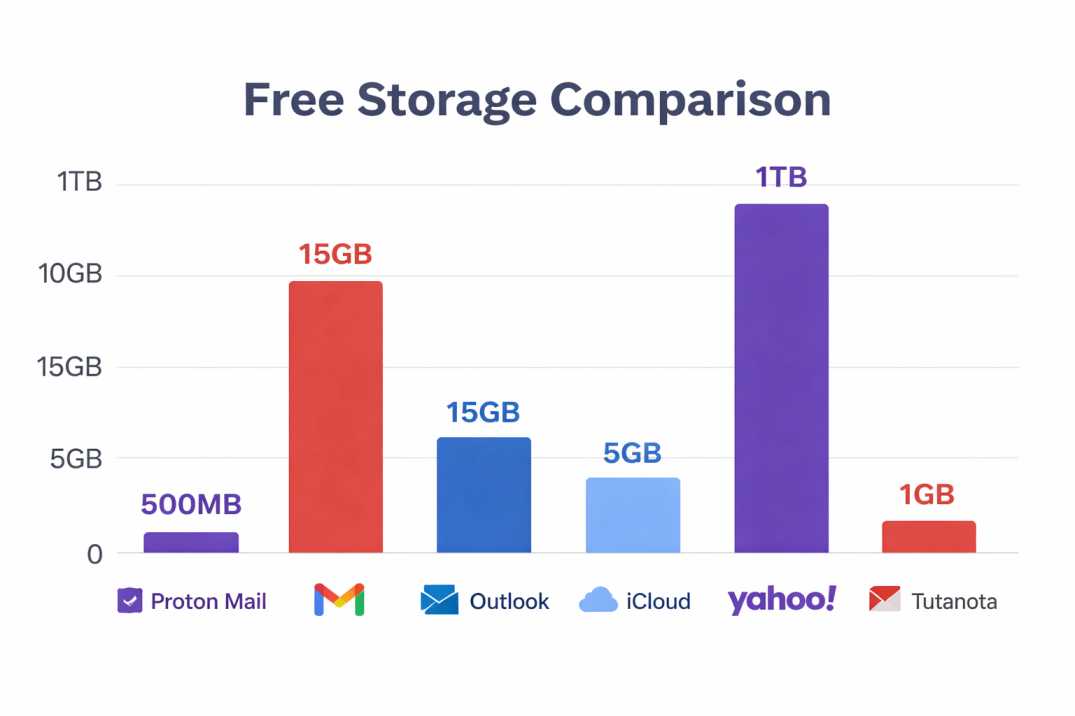
Privacy advocates wanting open-source encryption with more free storage than Proton Mail. Good Proton alternative if you need 1GB vs 500MB. Less user-friendly than mainstream options but stronger on transparency and security.
| Service | Free Storage | Privacy | Mobile App | Best For |
|---|---|---|---|---|
| Proton Mail | 500MB | Excellent | Good | Privacy priority |
| Gmail | 15GB | Low | Excellent | Google users |
| Outlook | 15GB | Medium | Excellent | Microsoft users |
| iCloud Mail | 5GB | Good | Excellent (iOS) | Apple users |
| Yahoo Mail | 1TB | Low | Fair | Storage hoarders |
| Tutanota | 1GB | Excellent | Good | Open-source fans |
Every service listed is completely free for personal use. Create accounts on 2-3 platforms. Forward emails to each for a week. Test mobile apps daily. Check spam filtering accuracy. Evaluate which interface feels natural.
Privacy-conscious individuals: Choose Proton Mail. Most people: Gmail or Outlook work perfectly fine. Apple users: iCloud Mail integrates seamlessly. The "best" personal email account is the one you'll actually use consistently.
For business email marketing tools, see our budget email marketing platforms guide instead—those optimize for campaigns, not personal communication.
Testing Methodology: We used each personal email service for 60+ days with real daily usage. Privacy policies verified February 2026. Storage limits tested with actual file uploads. Mobile apps rated on iOS 17 and Android 14. Spam filtering tested with 100+ known spam messages per platform.
Affiliate Disclosure: This article may contain affiliate links. However, all platforms listed (Gmail, Proton Mail, Outlook, iCloud, Yahoo, Tutanota) are free services. We earn no commission from free account signups. Recommendations are based solely on testing and user experience.
Last Updated: February 23, 2026 | Next Update: June 2026 (semi-annual privacy policy review) | Author: Paresh, DigitalsProductivity